


It's not too late. It never was.
Singing lessons for adults — beginners very much included. No auditions, no judgment, just an hour a week that's completely yours.
Lessons that meet you where you are
Most adults who call us say some version of the same thing: "I've always wanted to sing, but…" Here's the truth from inside the studio: adult voices respond beautifully to training. Breath support, range, tone, confidence — they build at any age, and they build fast when the coaching is one-on-one and tuned to you.
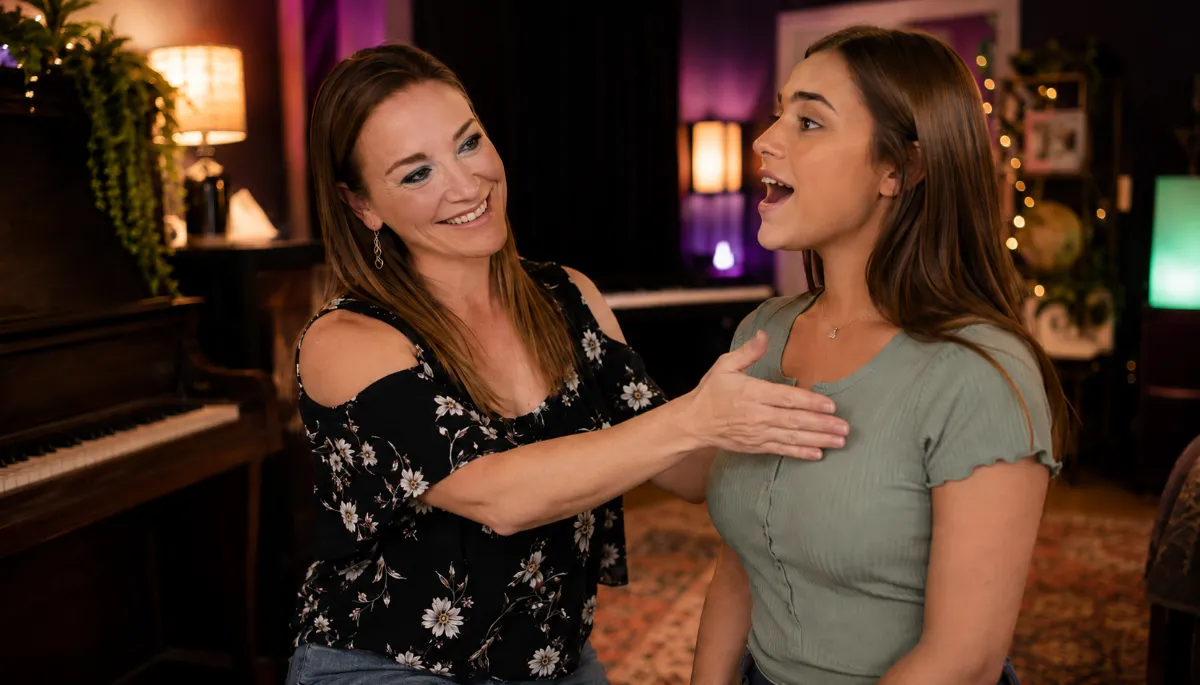
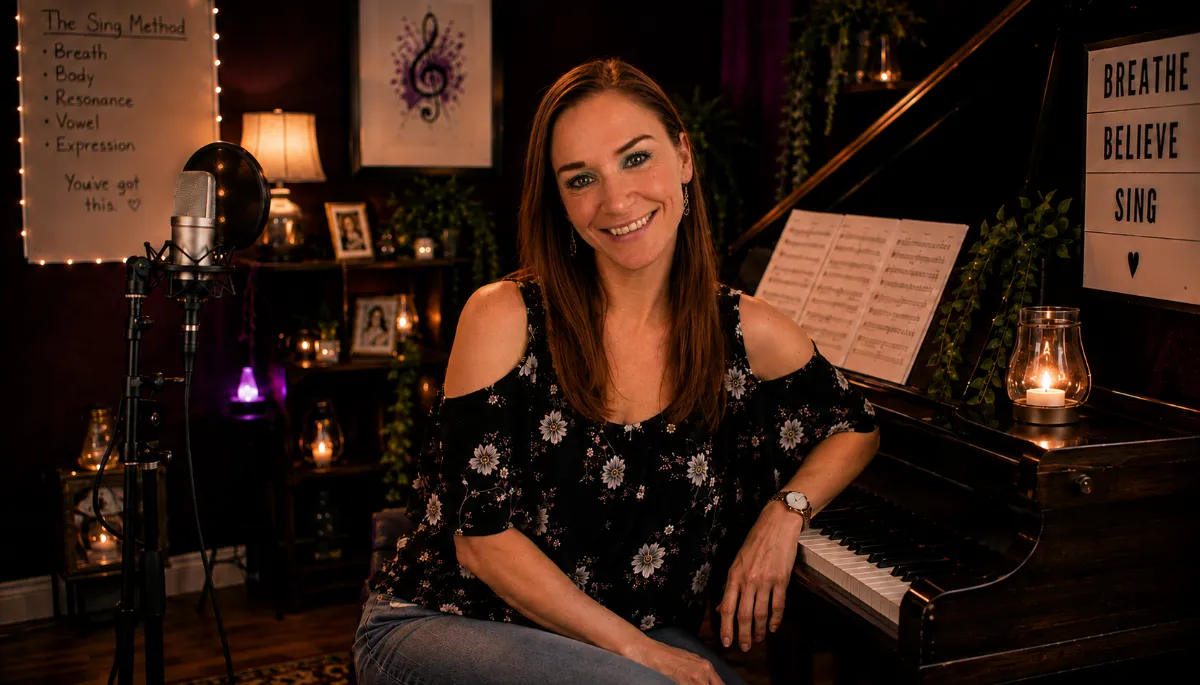
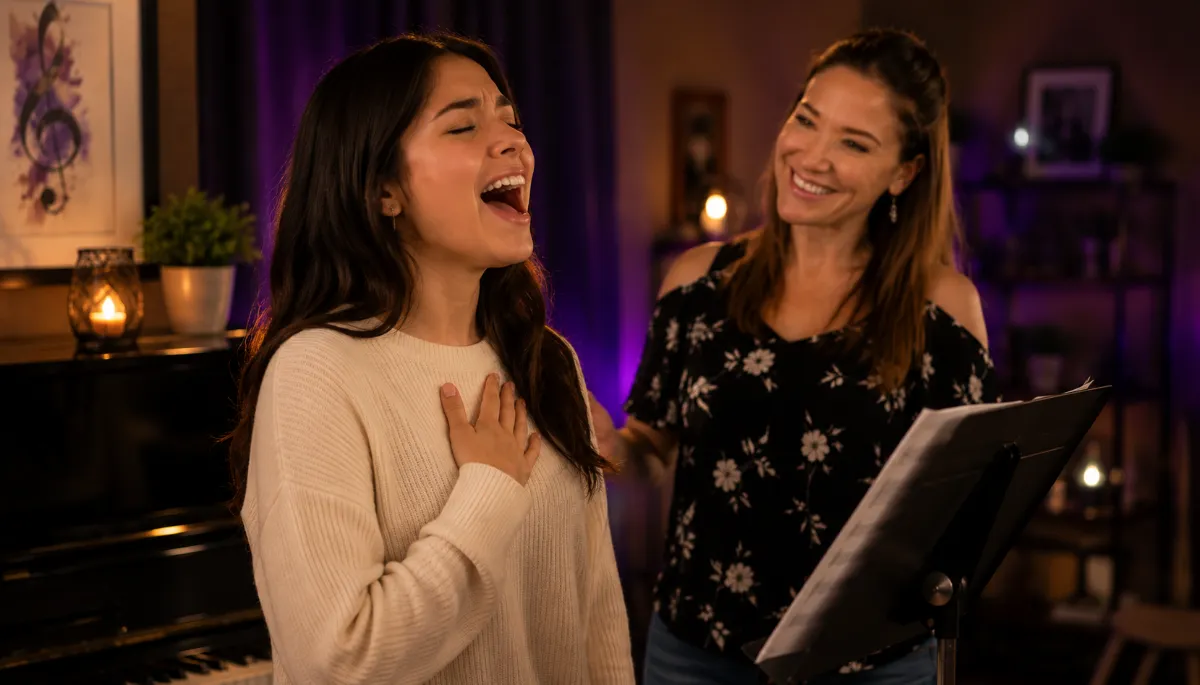
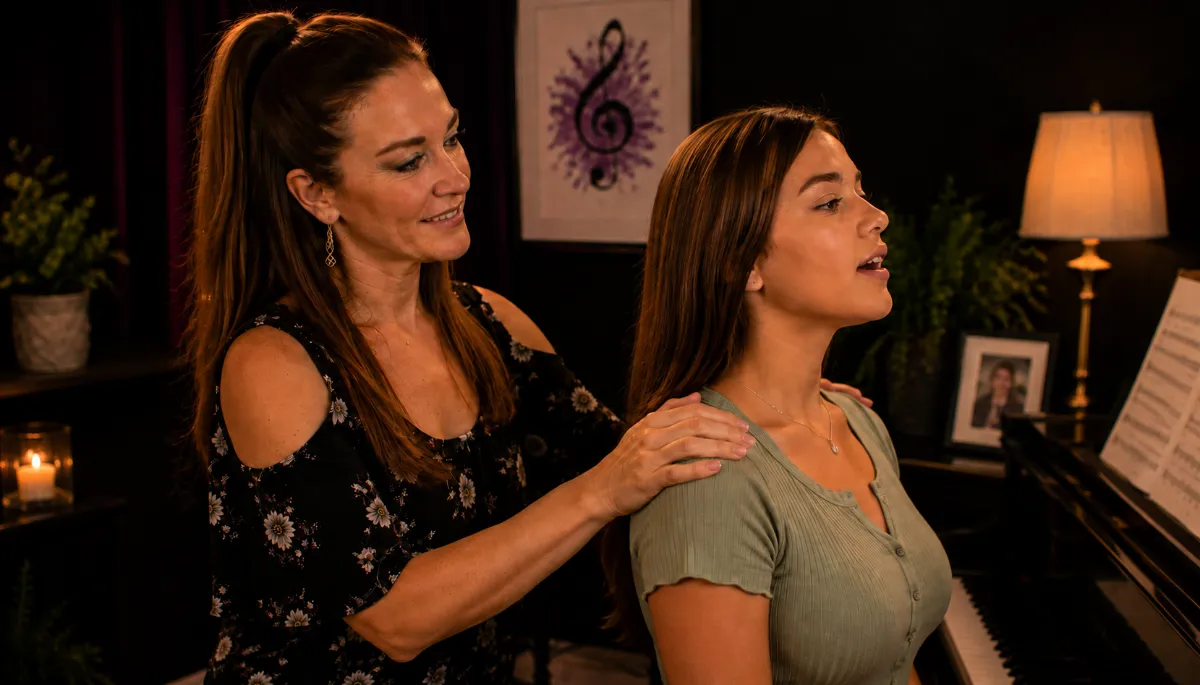
Lessons meet you exactly where you are. Total beginner who sings in the car? Great — that's a voice waiting to be trained. Returning after years away? Your instrument remembers more than you think. Every session is 60 minutes with Josie in her Reno studio, built on the same foundations every lesson here stands on: breath, body, mind, and story.
"Is it too late to learn to sing?" — the honest answer
No — and not as a pep talk, as a fact of how voices work. Singing is coordination, not youth: breath support, vocal-fold closure, resonance placement, and ear training are all skills an adult brain learns extremely well. Adults actually hold a few advantages over kids in vocal training — you practice deliberately, you understand instructions the first time, and you know exactly which songs you want to sing.
What adults do carry is history: decades of speaking habits, shallow breathing, and a well-rehearsed inner critic. That's why adult singing lessons here start with un-learning — releasing tongue tension you didn't know you were holding, rebuilding the breath from the diaphragm up, and letting the voice you already have out of storage. Most new adult students hear a real difference in their first hour, not their first year.

For the secretly talented
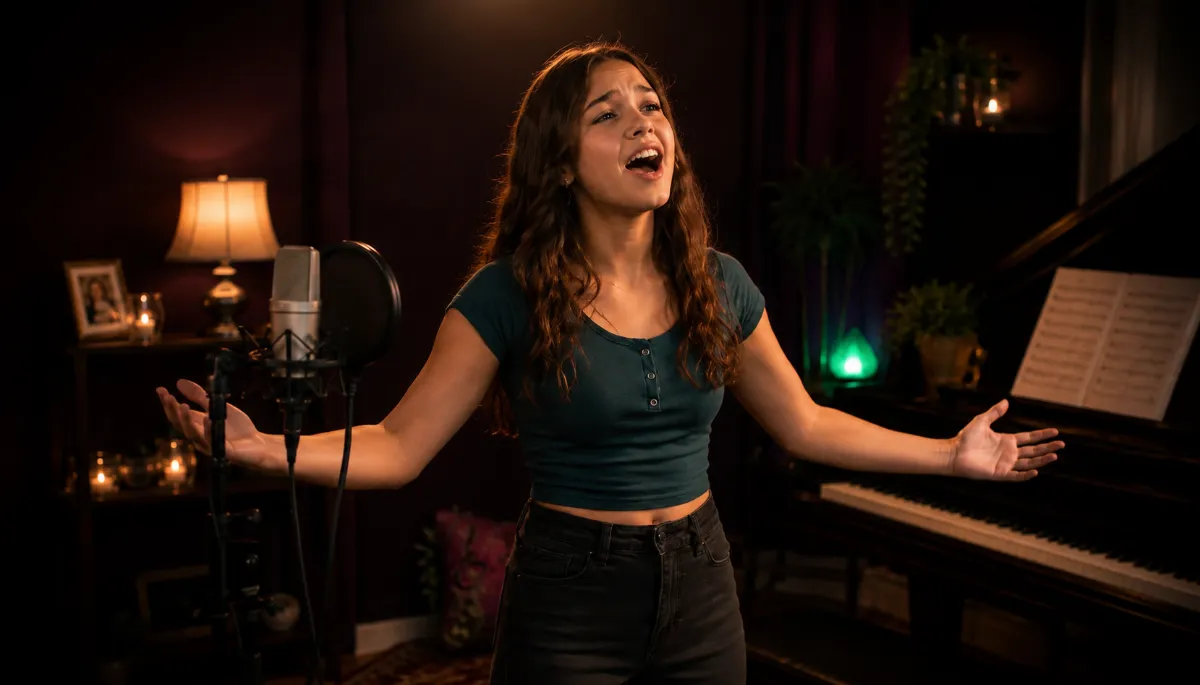
You know who you are. You sound great in the car and the shower, someone at work once said "you should take voice lessons," and the thought of singing in front of an actual human makes your chest tighten. A surprising number of our adult students walked in exactly like that — including genuinely gifted singers who had never once been heard.
Josie has a drawing exercise for this: sketch the world's smallest perfect circle — easy, controlled, safe. Now draw a big perfect circle. You have to commit to the arc. Quiet singing is the small circle; the big, free sound only happens when you go for it knowing it might wobble. A private lesson is the one room where the wobble costs nothing — no audience, no judgment, one coach whose whole job is getting you to hear how good you actually are.

The best hour of your week
There's a reason adults keep their lesson slot like it's sacred. Singing is one of the few activities that is physical, mental, and emotional at once: you're managing breath like an athlete, solving problems like a student, and expressing something true like an artist — for one hour, with your phone face-down.
The body chemistry is real, too. Sustained exhalation slows the nervous system the way breathwork does, and singing releases endorphins — Josie puts it simply: "It makes you live longer. It makes everything better." Students come in from work fried and leave lighter. The voice lesson is the excuse; the hour is the point.

Every style is welcome here
Vocal coaching here isn't one-genre. Whatever you want your voice to do, the technique underneath is trainable:
Pop, rock & singer-songwriter
Belting without blowing out your voice, style without strain, and the breath control that separates karaoke-brave from actually-good. Rock and pop singers often arrive with power and leave with power plus longevity.
Jazz, soul & R&B
Phrasing, runs, and the talking-on-pitch intimacy those styles demand. If your references are Lauryn Hill or John Legend rather than Broadway, you're in the right room.
Classical & choral
Breath support, vowel purity, and blend — whether you sing in a choir and want to hold your section down, or you're exploring classical technique for its own sake.
Musical theatre
Character, diction, and audition craft — deep enough that it has its own page. See our musical theatre and audition prep training.

What your first month of lessons looks like
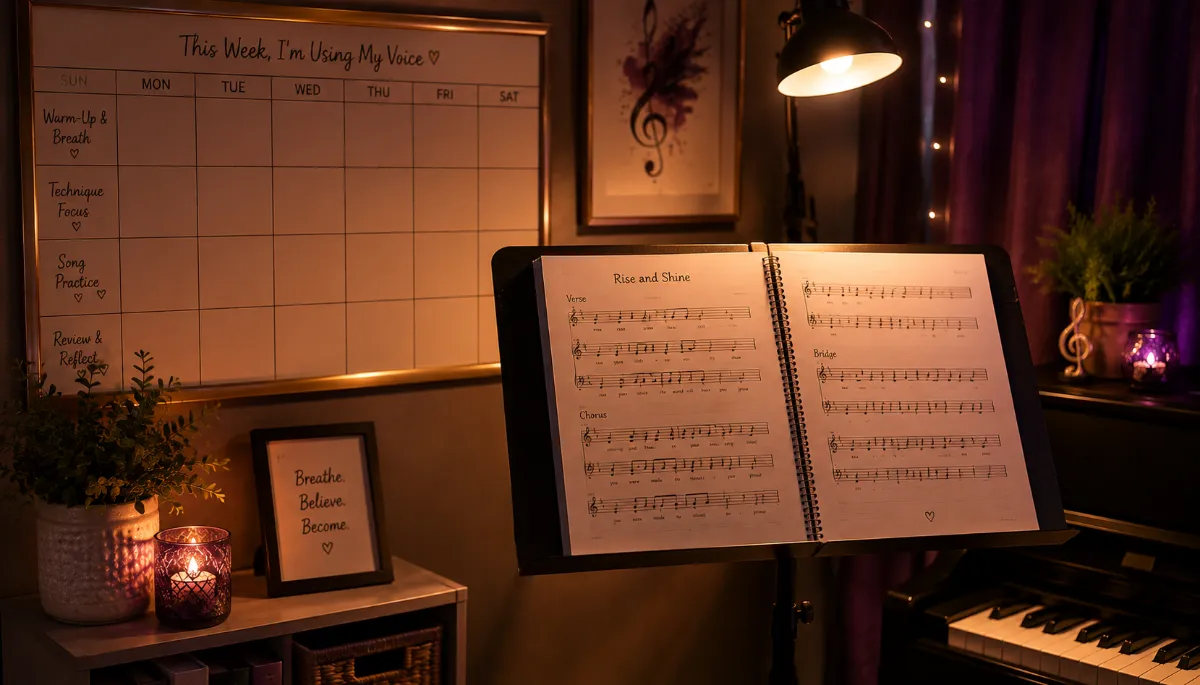
Week one is discovery: the warm-up sequence that wakes the whole instrument, a listen to where your voice is today, and a first song. Week two, technique starts sticking — diaphragm-first breathing stops being a thought and starts being a habit. Week three, your song gets real coaching: vowels, phrasing, dynamics, the notes that make it yours. By week four you're performing it — not like you're in a choir, like you're the star.
Every voice moves at its own pace and the plan adapts, but that arc is why the four-lesson package exists: momentum is the method.

Built into every lesson


Common questions
Singing is a trainable skill, not a genetic lottery. Pitch, breath support, tone, and range all improve with coaching and practice at any age — "tone deafness" is far rarer than people think, and almost always turns out to be an untrained ear.
We warm up the whole instrument, find where your voice is today, and sing something you like. You'll leave with real notes and a real plan — and most beginners are surprised how much changes in one hour.
Most adults hear a difference in the first lesson and a real difference within a month of weekly lessons. Range and power build over months; confidence usually arrives faster.
In Josie's studio in Reno. Adults drive in from Sparks, Carson City and Incline Village for their weekly hour, and pay at the lesson.
Pop, rock, jazz, soul, classical, musical theatre, karaoke confidence — the technique underneath is universal, and the songs are always yours.
Little habits that change how you sing
Six things from Josie's studio you can try today, before your first lesson or between lessons.