


"You have to lean into your mistakes in order to get better. You have to — or you won't improve in any aspect of life."
The Process
What a lesson is actually like
No mystery. This is the hour the way Josie runs it — and what happens before you walk in, between lessons, and after.
Before your first lesson
Three things to know, nothing to prepare
Pick a time
Schedule online or call (775) 846-0553. You'll get a confirmation by email and a reminder before the lesson. Every lesson is 60 minutes in Josie's Reno studio.
Bring a song you like
Any song, any style. It doesn't have to be good for you yet — that's the point. Bring water, too. No experience, no audition, nothing to practice first.
Pay at the lesson
Cash, Zelle, Apple Pay, Venmo, or check, at the lesson. No contracts. Parents are welcome to sit in with younger kids — we'll find the setup that helps your child sing most freely.
The hour
How a lesson runs
Four parts, in this order, every time. What changes is the song, the notes, and how far you've come.
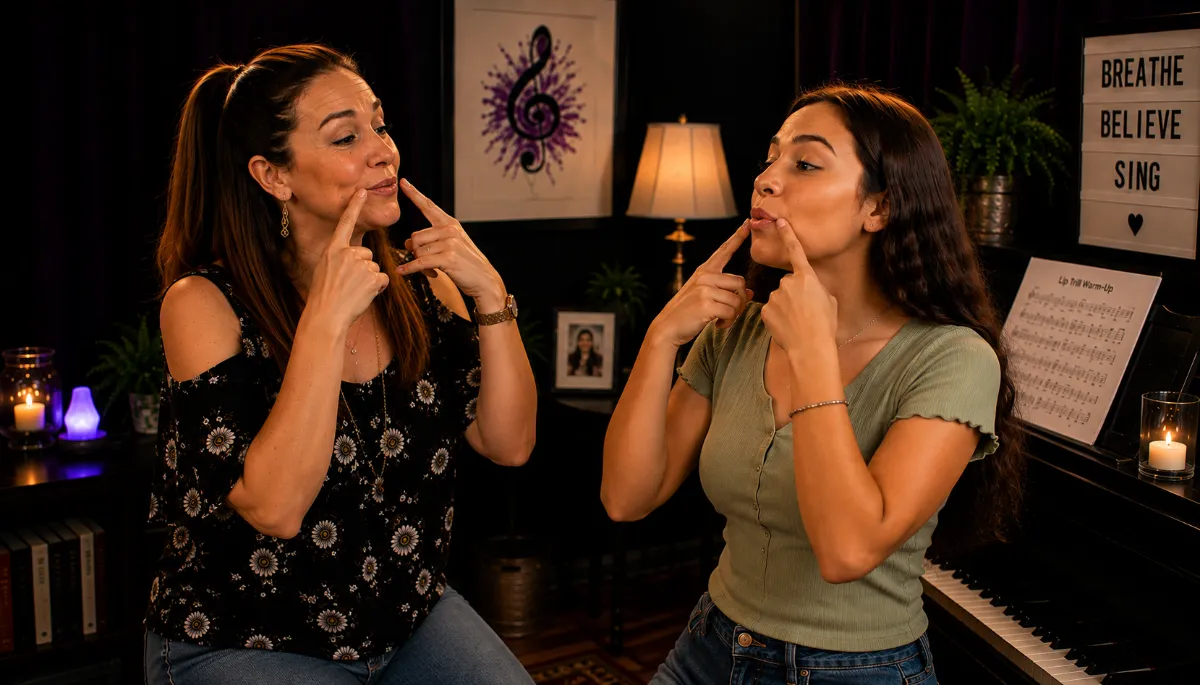
Wake up the instrument
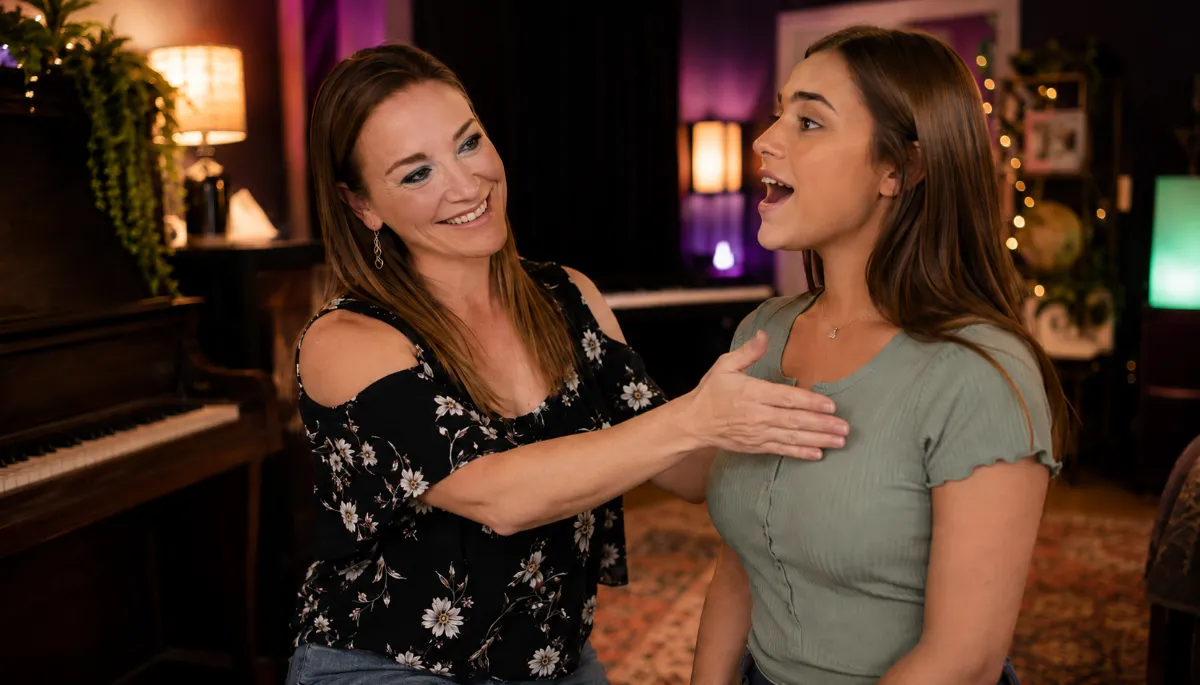
Four diaphragm-first deep breaths. Humming circles — low, middle for the mixed voice, then the top to wake the highest notes. Lip trills through the same pattern. Then the breathing competition: one full breath, held out as a steady vocal fry for as long as you can — teaching your brain that airflow is something you control.

Scales & the warm-up song
Scales from your lowest note up — soft palate raised, tongue relaxed, singing like you have dimples. Then a warm-up song you choose, sung with the new relaxed voice instead of the old muscle memory. This is usually where students surprise themselves.
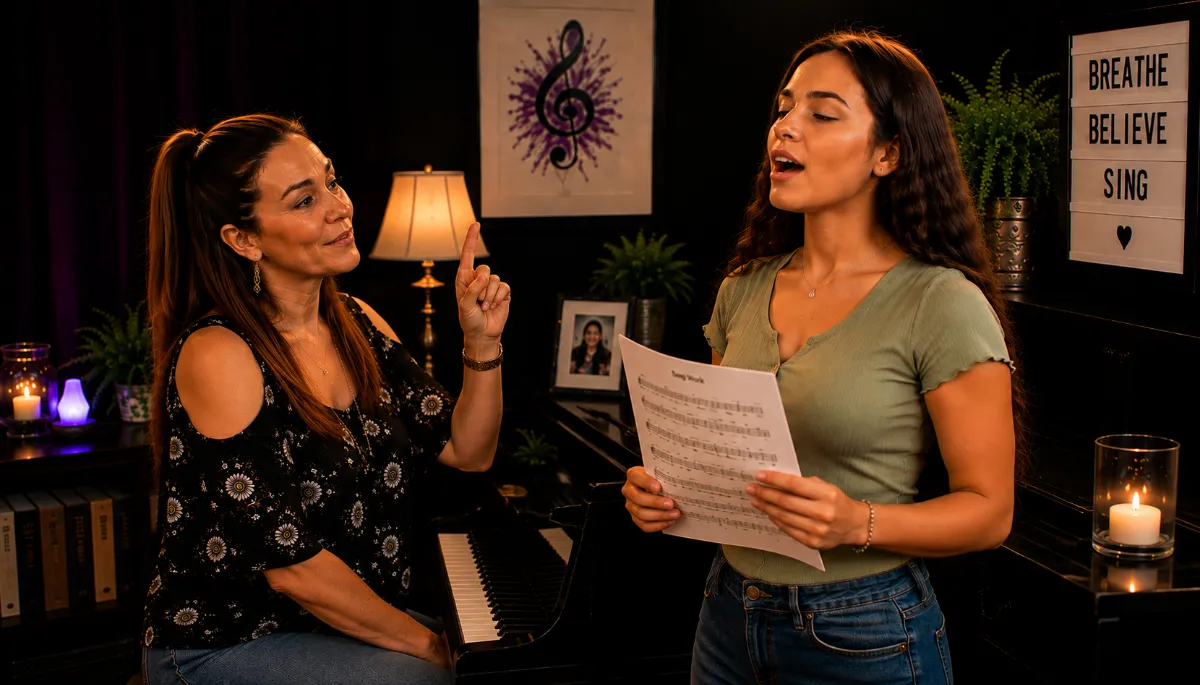
Song work, with surgical notes
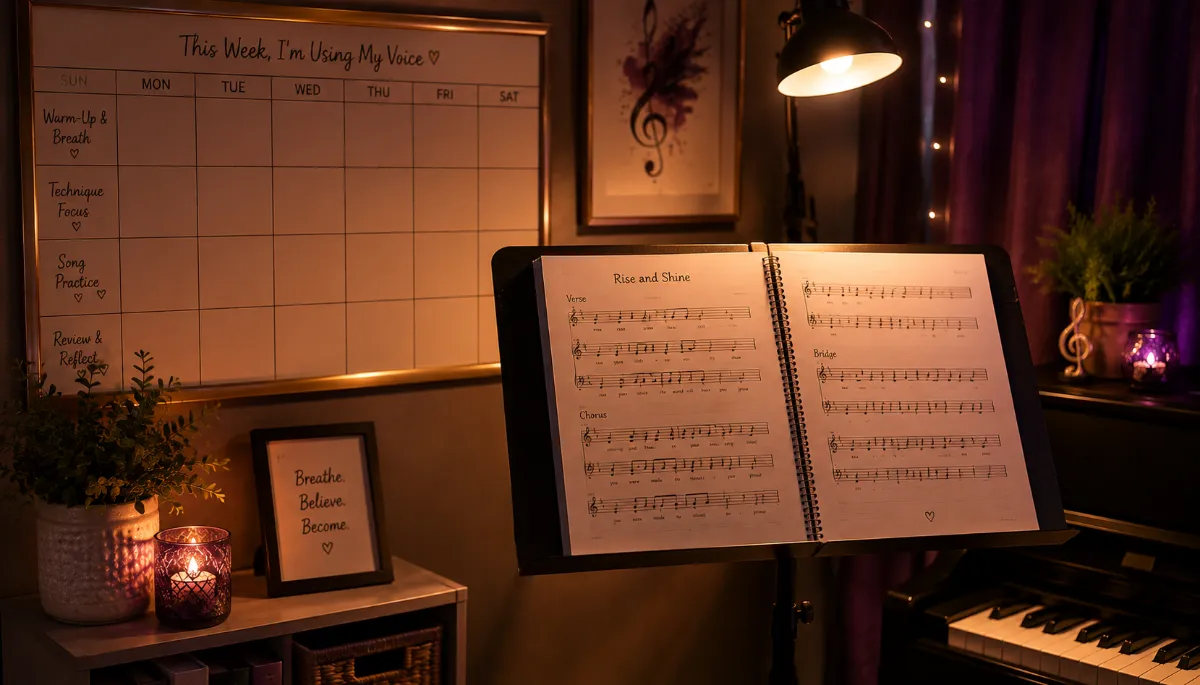
Your song, your goals, and specific coaching — enunciate like a drum, know exactly which vowel you're singing, talk on pitch instead of drifting, smile for placement, finish your consonants. And when a line keeps going wrong, out comes the sheet music — not as theory, but as a roadmap. You don't need to read music: watching the dots rise and fall while you sing tells your brain what's coming next. One student fixed a line he'd sung wrong for a year the first time he saw it on paper.
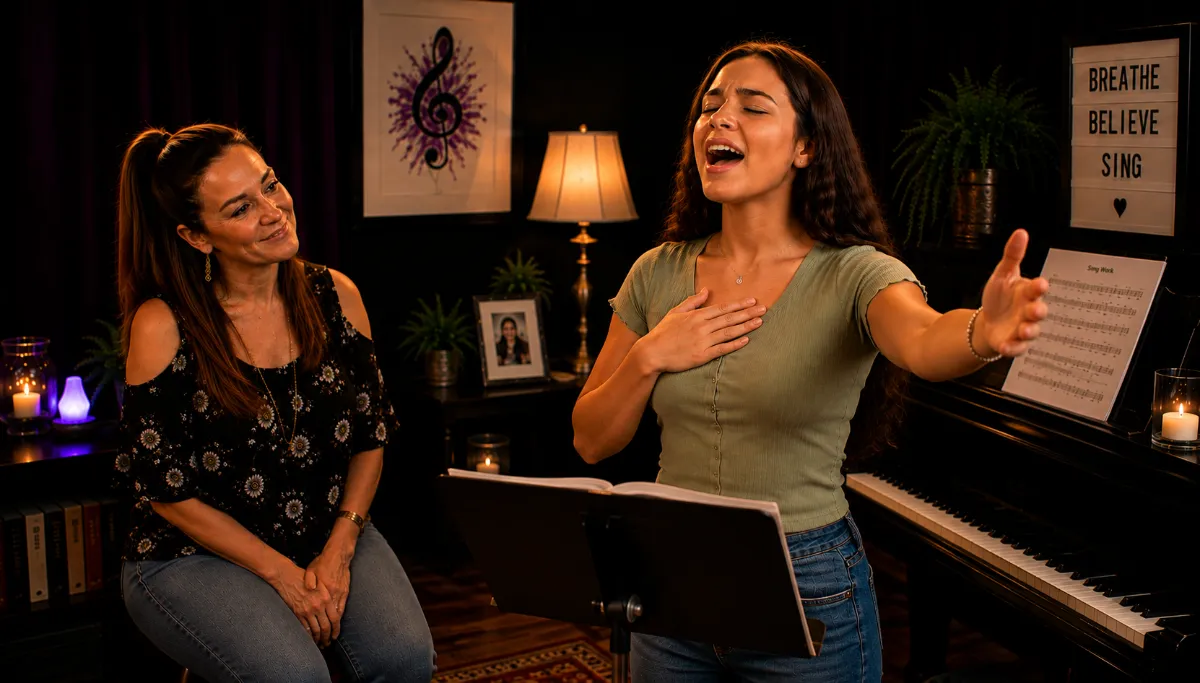
Perform it like the star
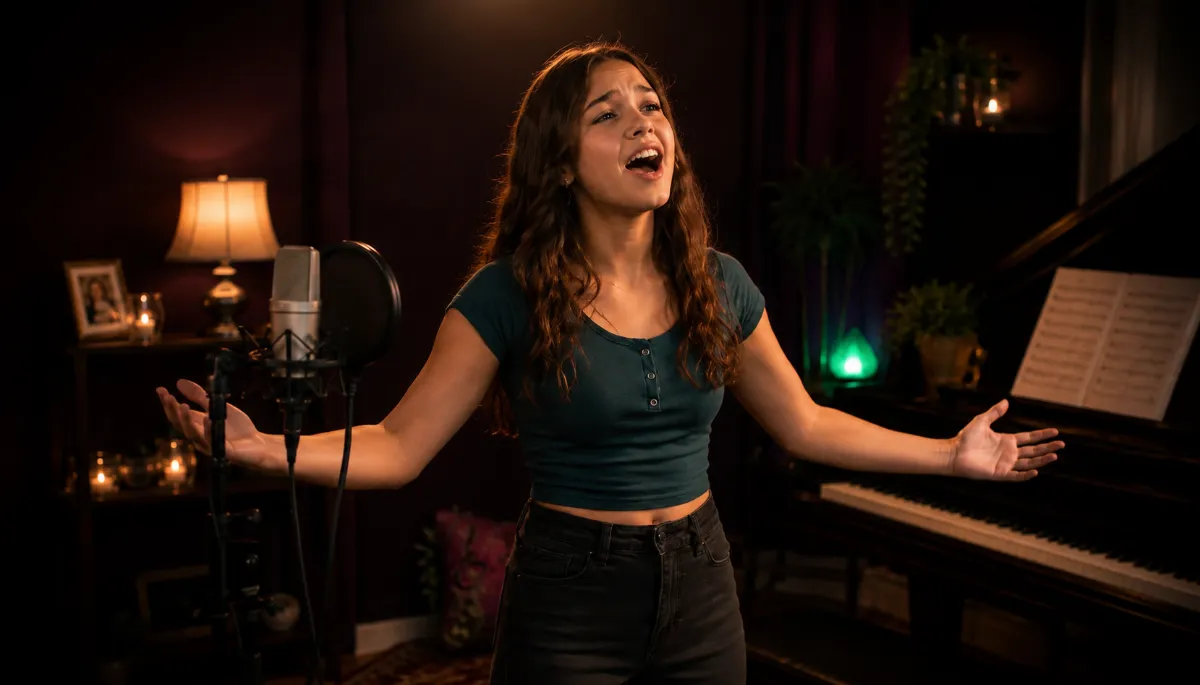
Not like you're in a choir — like everyone came to hear you. Get into character (“it's okay to be that person — it doesn't mean it's you”), take up all the space in the room, and finish the hour singing full-out. You'll leave knowing exactly what to practice next.
How Josie teaches
You can't put your instrument back in its case
A guitarist's instrument waits in the case all week, perfect. Yours doesn't.
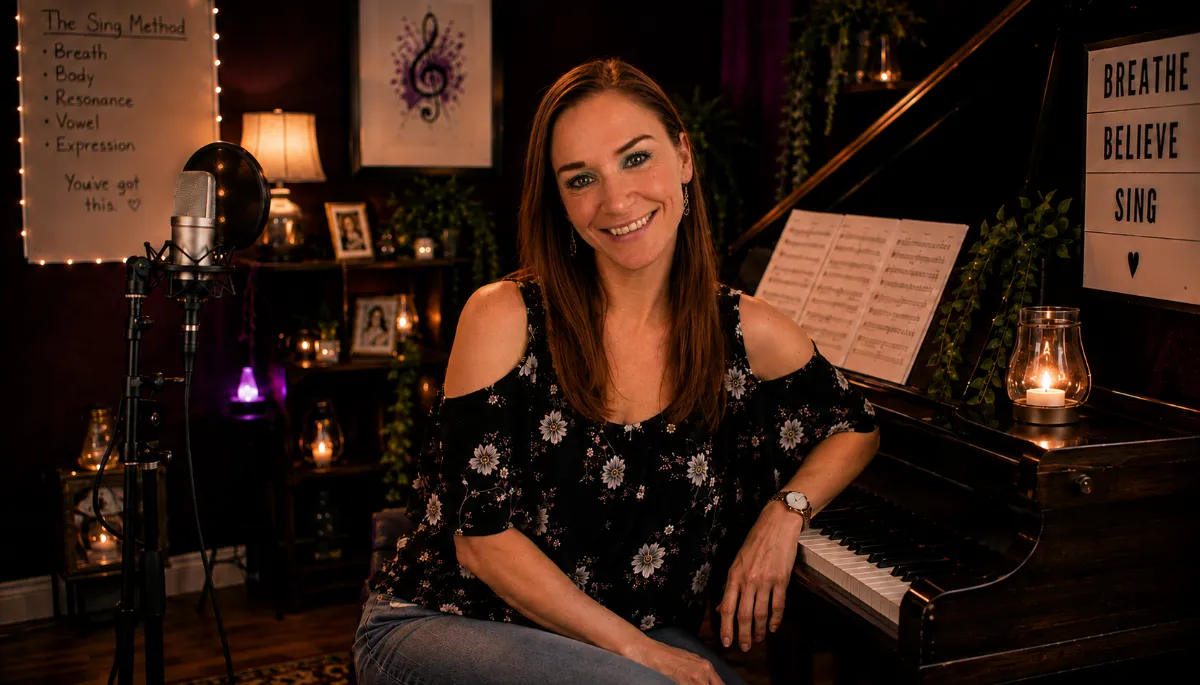
Your instrument is your body. It's with you when you're eating, talking, holding your breath through a hard day. So Josie trains the body that carries the voice — how you breathe, how you stand, how much air moves and how steadily — and she pays attention to the person inside it, too.
When you go to sing and something gets in the way, it's usually you that comes up: the held breath, the old habit, the time someone told you to be quieter. A good lesson works on the note and the person at the same time. That's the whole approach, and it comes down to four things she listens for.

What she listens for
Body. Breath. Mind. Story.
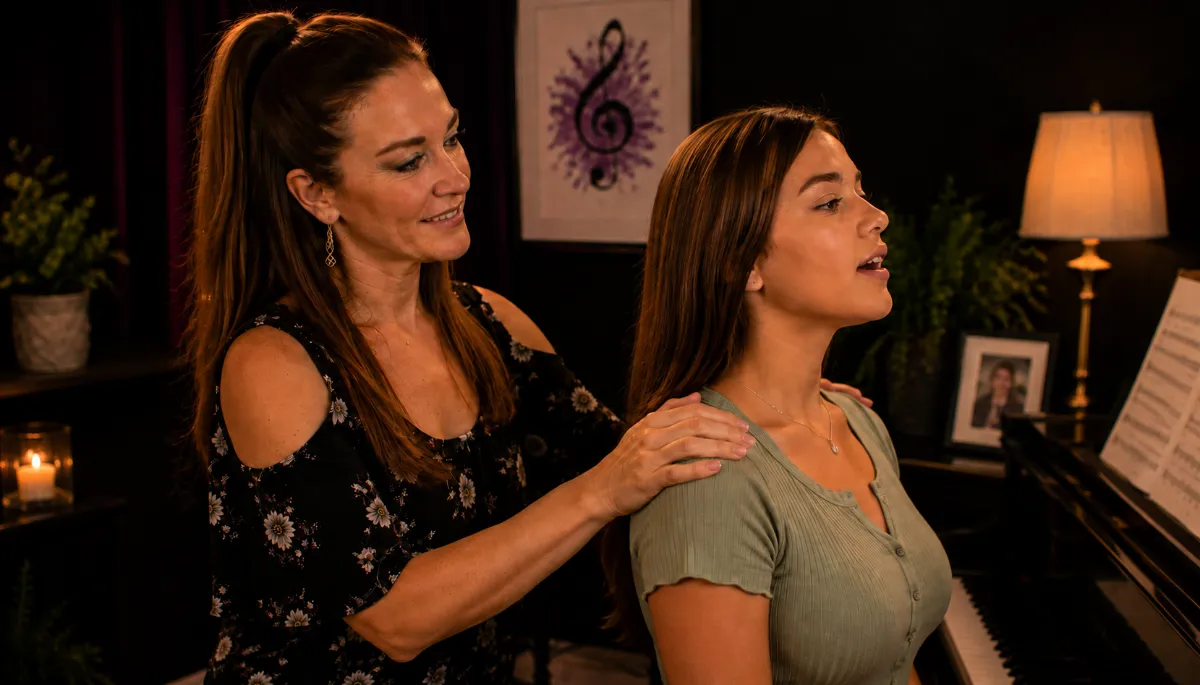
Body
Posture, a relaxed tongue, a raised soft palate, a smile that changes the sound. The physical machine of a free voice.
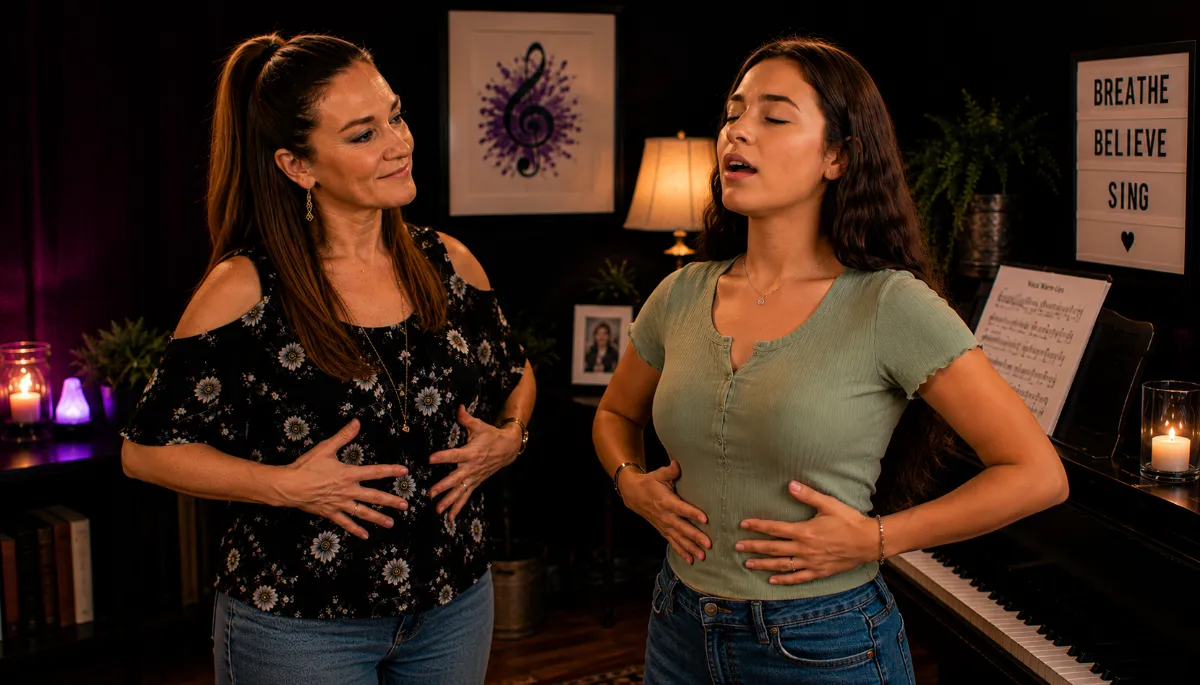
Breath
Diaphragm-first breathing and controlled, consistent airflow — the engine under every note you'll ever sing.
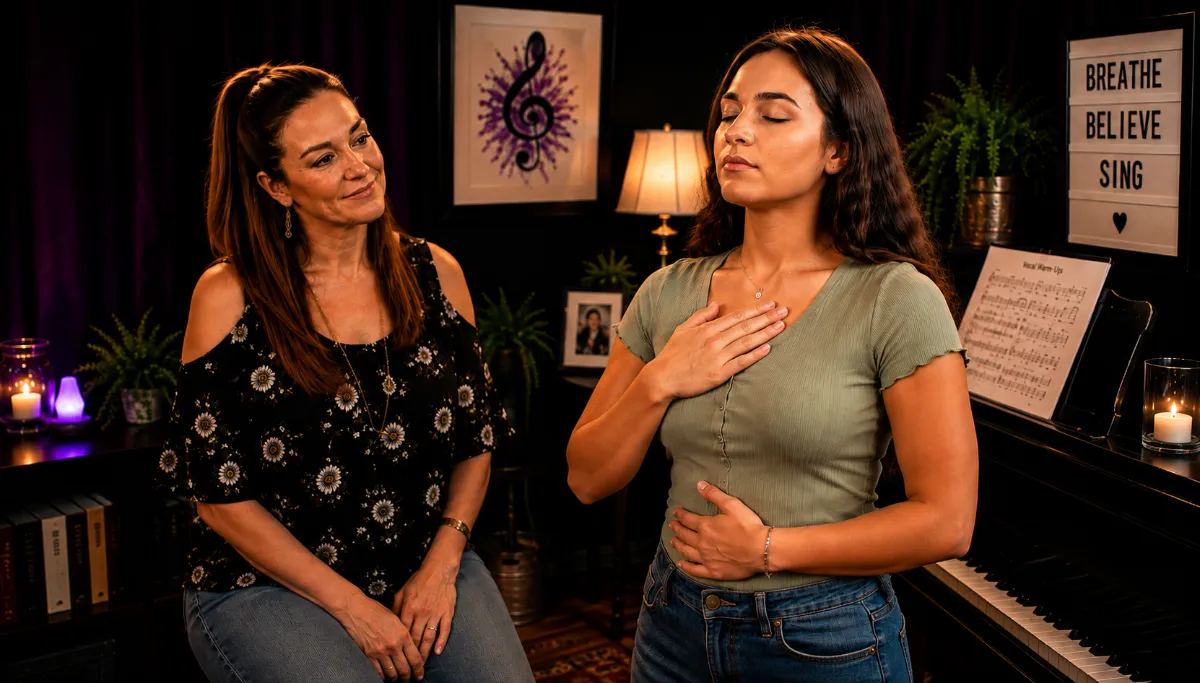
Mind
Confidence, character, and leaning into mistakes — there's a place between terrible and perfect called the learning ground.
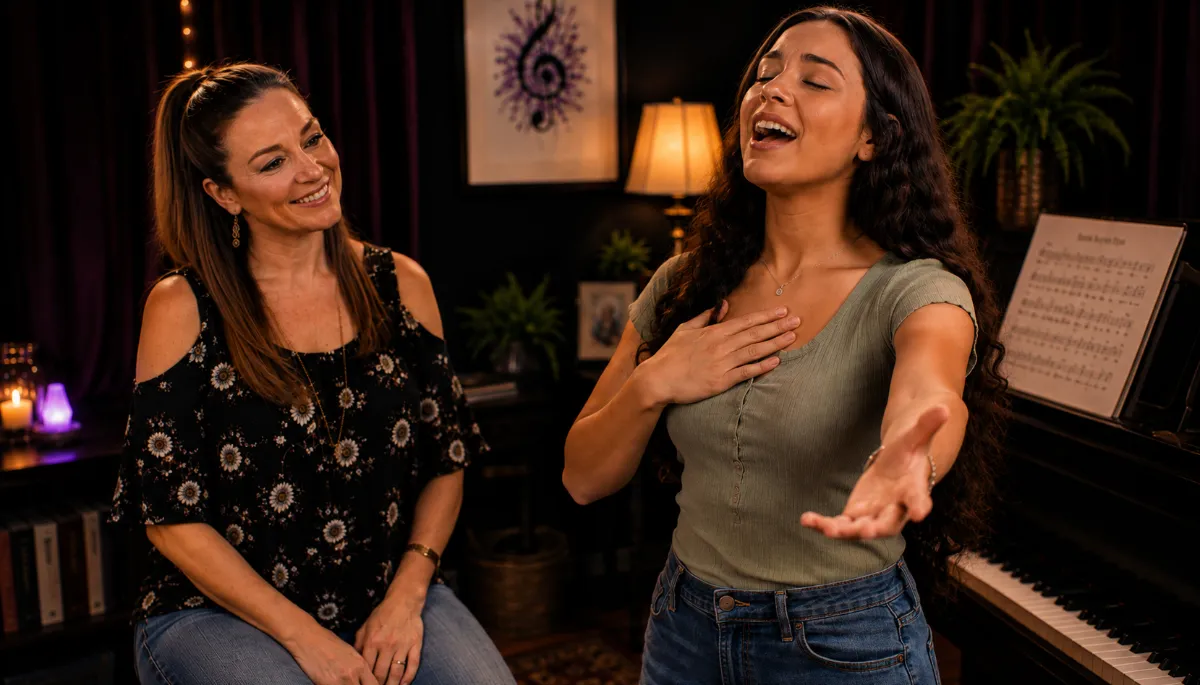
Story
Singing is storytelling — as old as humanity. The song only lands when it's yours: your experience, your emotion, your voice.

Between lessons
Little and often beats a marathon
You leave every lesson knowing exactly what to practice. Ten to fifteen minutes most days does more than an hour on Sunday.
- Warm up before you sing hard — the same breaths, hums and lip trills from the lesson, in the car if that's where the time is.
- Work the notes, not the whole song — the vowel, the breath, the line that keeps going wrong. That's the homework.
- Look after the instrument — water, rest when it's tired, and never sing through pain or hoarseness.
- Come back weekly if you can — voices grow week over week. That's what the four-lesson package is for.
In her words
A lesson that listens back
Students walk in with a bad day sometimes. Go ahead and talk about it. Then sing about it. Some things a voice can only say in a song.
"We're not talking about whether you're flat anymore. We're talking about breath support — more advanced things. You're a different singer than your first lesson."
"Draw me the world's smallest perfect circle. Easy. Now draw a big one — harder, right? Quiet singing is the small circle. It's time for the bigger circle, where something can go wrong. You just have to go for it."
"You're great — and you're so scared of being great. We've got to get you to hear it. That's all we've got to do."